Yellow Sac Spider Bite: Symptoms, Danger & Treatment (2026)
Yellow sac spiders probably cause more spider bites than any other species in North America, and most of those bites are quietly harmless. The confusing part is that a fresh bite can look enough like a brown recluse bite to send people into a panic they don't need. Here's what the mark actually looks like, how dangerous it really is, and when it's worth a call to a doctor.
What the yellow sac spider bite looks like
The first sensation is usually a sharp, sudden sting, often compared to a bee sting, though a fair number of people feel nothing at all and only discover the mark later, sometimes after waking up. Because the spider is a nocturnal hunter that roams rather than sits in a web, contact often happens in bedding or clothing without any warning.
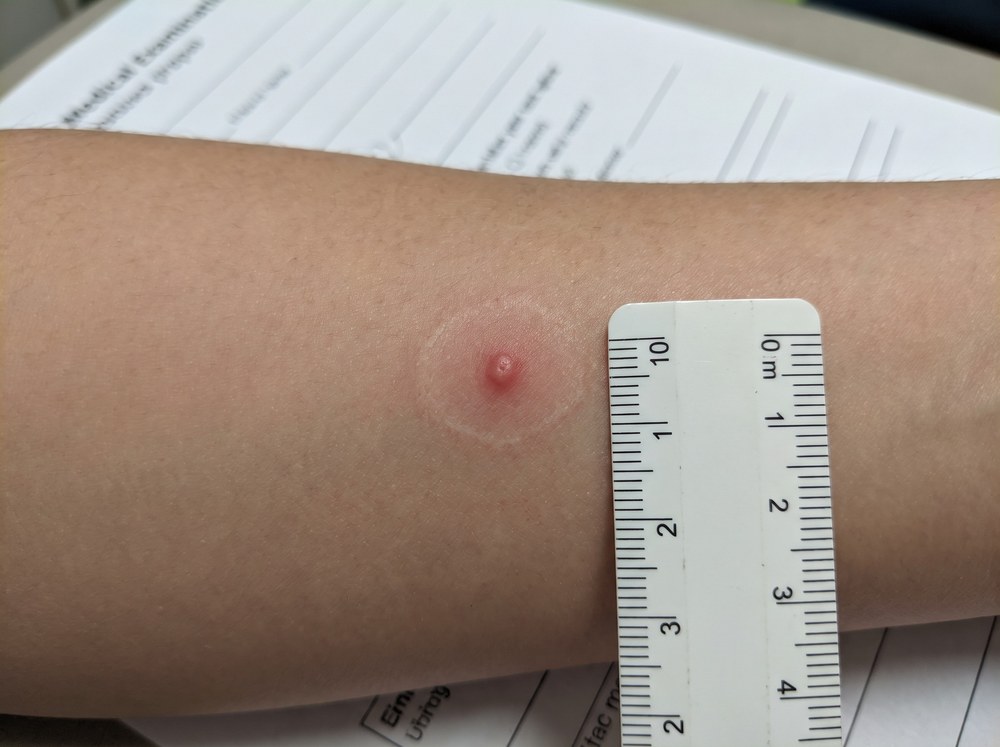
The classic visible sign is two small, raised red bumps set close together, roughly a third of an inch apart, surrounded by mild swelling and redness. Within a few hours a small blister can form at the site, and if it bursts it leaves behind a shallow open sore that takes longer to close than the surrounding skin.
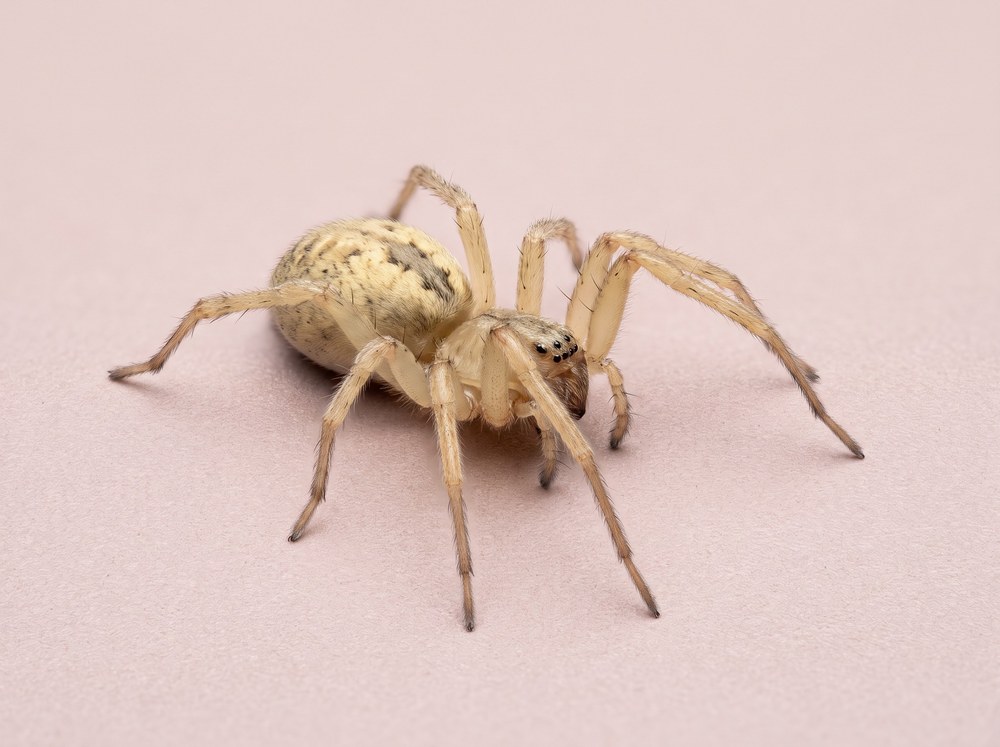
A true bull's-eye pattern is not typical of this bite. What you're more likely to see is uniform redness that gradually fades outward, sometimes with a firm, tender center. If the marks on your skin don't quite match what's described here, Insectio's detailed yellow sac spider identification guide walks through photographs of the spider itself for comparison, which can help confirm what you're dealing with before symptoms progress further.
Misidentification runs in both directions. This bite is frequently mistaken for a brown recluse bite because both start with redness and swelling, and it's also commonly confused with skin infections like staph or MRSA, which are sometimes wrongly blamed on spiders that were never actually involved.
Which Bug Bit Me?
Not sure it was a yellow sac spider? Answer three questions and we'll narrow the list.
For a broader visual sweep beyond spiders, bugidentifier.org's identify picture of bug tool covers other household insects too, in case something else entirely is behind the mark.
Symptom timeline
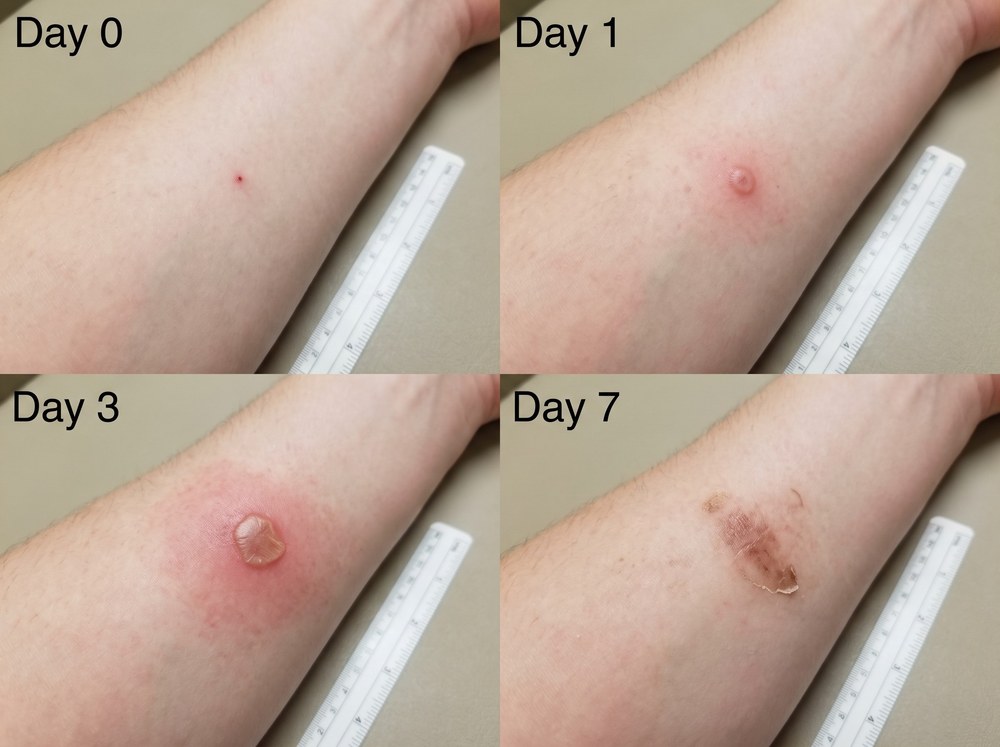
Hours 0–2. A sharp sting or a barely-noticeable pinch, followed by two small red bumps close together and mild local swelling. Some people feel nothing during this window at all.
Hours 2–8. Redness and swelling typically expand slightly, the burning sensation can intensify, and a small blister may begin forming at the center of the bite.
Day 1–2. Swelling and pain usually peak here. If a blister formed, it may burst into a shallow open sore. Rarely, mild systemic symptoms such as headache or nausea appear.
Day 3–7. Most bites steadily improve, with redness fading and any open sore beginning to close over the following one to two weeks. If the bite is still worsening at this point, if the center is darkening, or if new symptoms like fever appear, seek medical care rather than continuing to wait.
Wondering how serious yours actually looks?
Run the Symptom CheckerIs it dangerous?
The majority of yellow sac spider bites resolve on their own within one to two weeks without any medical treatment. Redness, swelling, and mild pain are the norm; serious complications are the exception, not the rule.
The worst-case scenario people search for is necrosis — tissue death at the bite site. This can happen with a yellow sac spider bite, but it is uncommon and, when it does occur, considerably less severe than the necrosis associated with a brown recluse bite. It also rarely leaves lasting scarring.
Children, older adults, and anyone with a known spider or insect venom allergy are at somewhat higher risk of a more pronounced reaction, mainly because their immune response to the venom or any resulting infection can be harder to predict. People on immune-suppressing medication should also treat any worsening bite more cautiously.
Bottom line: monitor the bite for the first 48 hours. If the redness keeps spreading, the center starts to darken or sink, or you develop fever, chills, nausea, or trouble breathing, that's the point to stop watching and start calling a doctor.
Bite Symptom Checker
Check every symptom you're currently experiencing. Get a plain-English risk read.
Treatment
Wash and elevate. Clean the bite with mild soap and warm water as soon as you notice it, then elevate the affected arm or leg if you can — this limits how much the area swells.
Cool, don't heat. A cold compress or ice pack, wrapped in cloth and applied for 15-20 minutes at a time, reduces pain and swelling. Heat is not recommended for this bite.
OTC support. An over-the-counter pain reliever such as ibuprofen eases discomfort, and an oral antihistamine can help if the area is itchy or mildly swollen beyond the immediate bite site. If you still have the spider in a jar or on camera, the BugKnow app can identify a yellow sac spider from a phone photo in seconds, which is useful if you want to confirm what bit you before deciding how urgently to act.
Watch, don't wrap. Leave the bite uncovered or loosely covered so you can check it daily — trace the edge of the redness with a pen to see if it's shrinking. If it's still spreading after 48 hours, or the center starts to darken, treat that as your cue to see a doctor.
Prevention
Yellow sac spiders hide in silk sacs tucked into ceiling corners, behind furniture, and in cluttered storage areas, so regular vacuuming and dusting disrupts their shelters before they settle in. Sealing cracks around windows, doors, and foundations keeps new spiders from wandering indoors in the first place.
Shake out shoes, gloves, and clothing left on the floor overnight, and wear gloves when moving boxes, firewood, or garden debris where a spider could be hiding. If you've spotted more than one in your home, a full inspection is warranted.
Wondering whether to head to urgent care?
Walk Through the Decision TreeShould You See a Doctor?
A short decision tree based on CDC and Mayo Clinic guidance.
1 / 3 Is there a dark, sunken, or spreading area at the center of the bite that looks like it's breaking down?
2 / 3 Are you having trouble breathing or swallowing, or is your face, lips, or throat swelling?
3 / 3 Has the redness or swelling been getting steadily worse for more than 48 hours, or do you have fever or chills?
Frequently asked questions
Can a yellow sac spider bite kill you?
No documented fatalities are linked to yellow sac spider bites in the sources reviewed for this page. The bite is venomous and can be painful, but it is not considered life-threatening to healthy adults. The exception is a person with a severe allergic reaction, which is rare but can turn any insect or spider bite into a medical emergency requiring immediate care.
What does a yellow sac spider bite look like in the first few hours?
Most bites appear as two small red bumps set close together, often about a third of an inch apart, with mild swelling and redness around them. The sensation is frequently described as a sharp sting similar to a bee sting, though some people feel nothing at all and only notice the mark later, sometimes after waking up.
How long does a yellow sac spider bite take to heal?
Uncomplicated bites typically resolve within about one to two weeks. Swelling and redness usually peak in the first day or two, then gradually fade. If a blister forms and breaks open, healing can take somewhat longer. A bite that is still worsening well past the one-week mark should be checked by a medical professional.
Do yellow sac spiders bite without being provoked?
Some species, particularly Cheiracanthium mildei, are more defensive than typical house spiders and have been reported to bite with little provocation, often at night while a person is sleeping or moving in bed. Most bites still happen when a spider is trapped against skin in clothing, bedding, or shoes and reacts defensively.
What is the difference between a yellow sac spider bite and a brown recluse bite?
Both can start with redness and swelling, but a brown recluse bite is more likely to progress to serious tissue damage, deep necrosis, and a slow-healing open wound over weeks to months. A yellow sac spider bite is generally milder, heals faster, and only rarely develops a small necrotic area.
Why are yellow sac spider bites often misdiagnosed as brown recluse bites?
The two bites can look similar in the early stages, and yellow sac spiders are common indoors, so they probably account for more spider bites than any other species, with bites often misdiagnosed as brown recluse bites by clinicians who never see the actual spider. Skin infections like MRSA are also frequently mistaken for spider bites, adding to the confusion.
Can a yellow sac spider bite cause necrosis?
In rare cases, yes. A yellow sac spider bite can occasionally produce a small necrotic lesion where tissue at the center of the bite breaks down, but this is far less common and far less severe than the necrosis associated with brown recluse bites, and it usually does not leave lasting scarring.
When should I see a doctor for a spider bite?
See a doctor if the redness or swelling keeps expanding after 48 hours, the center of the bite turns dark or looks like it is breaking down, you develop fever, chills, nausea, or vomiting, or you have any trouble breathing or swallowing. Any bite that is uncertain or rapidly worsening deserves prompt medical evaluation rather than a wait-and-see approach.